

Allons en France
Ten Sudanese students compete for the chance to go to France this summer in a competition organised by the Centre Culturel Français.
This is Mohammed and Mohayed, keeping the audience going as the judges make their decision.
News and vignettes
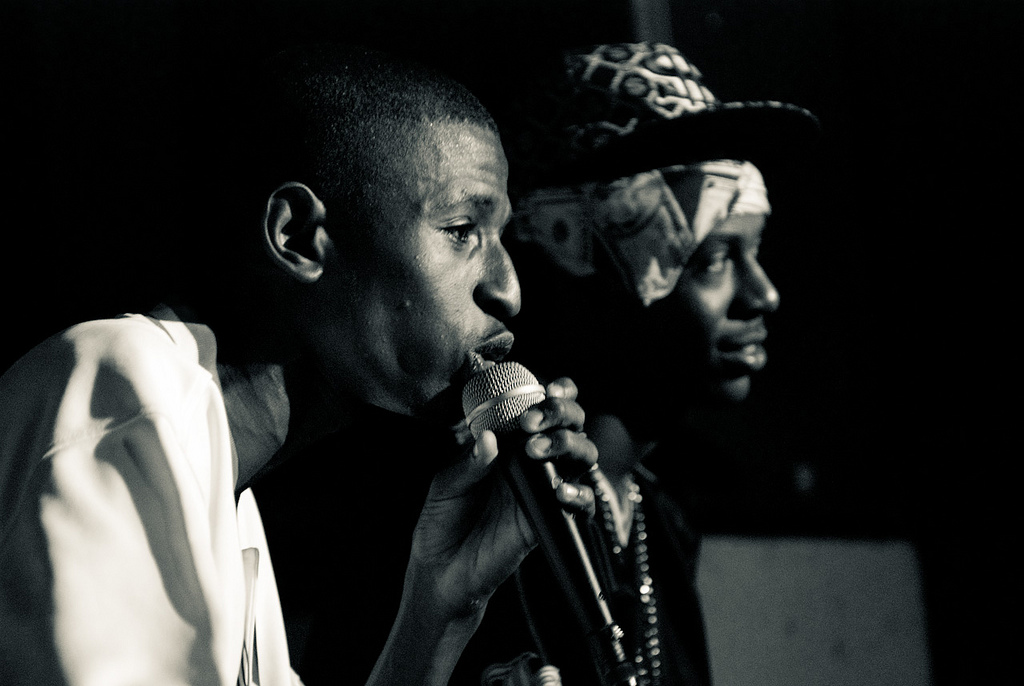
Ten Sudanese students compete for the chance to go to France this summer in a competition organised by the Centre Culturel Français.
This is Mohammed and Mohayed, keeping the audience going as the judges make their decision.

An afternoon spent cooking, an evening spent chugging up the Nile, Khartoum on one side, Bahri the other. We talked, we sang, we ate, we drank (Coke).
In the heat of a Khartoum night, the slightest breeze can instigate a feeling of euphoria.
And to hell with the mosquitos. I will always have Larium.
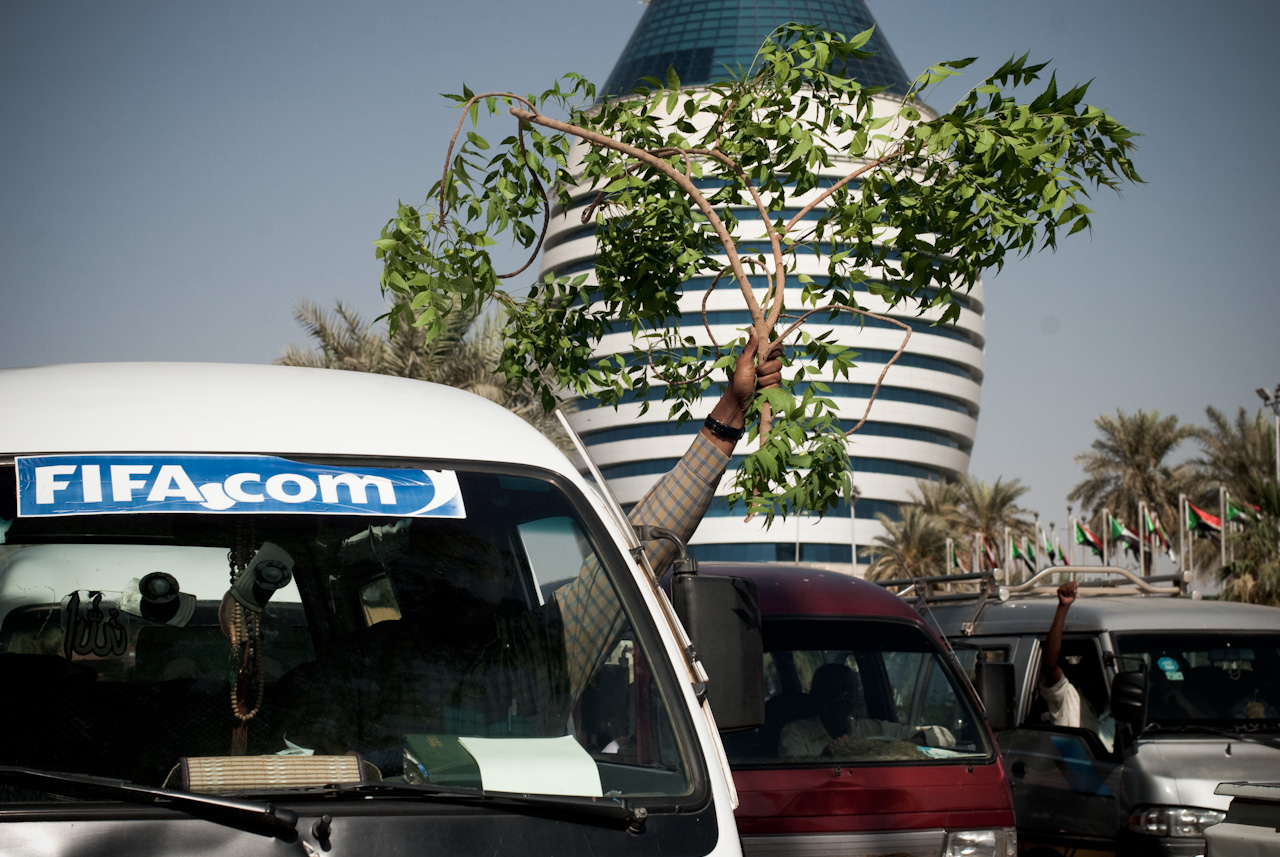
Sat on Sharia al-Nil, Tuti Island lies behind me, where people sit under the shade of the imposing bridge, drinking tea as the Blue Nile flows between them and Khartoum. In front of me stands Friendship Hall, the venue of the official announcement of the results of Sudan’s “step towards democracy”. Pick-up trucks surround the building with armed soldiers crammed into the back, both clad in blue camouflage.
Everybody knew the result already, but today Omar al-Bashir was declared winner of the elections, remaining President of Sudan, claiming 68% of the vote and with his National Congress Party (NCP) sweeping the North. Chairman of the Sudanese People’s Liberation Movement (SPLM), Salva Kiir, won 93% of the Southern votes, making him President of the Government of Southern Sudan, and the Republic’s vice-president.
As the results were announced, passing vehicles sounded their horns, with some drivers brandishing tree branches—the symbol for the NCP—out of their windows. Policemen in the street were shouting Allahu akbar, “God is great”, in celebration.
The elections have taken place under varying degrees of condemnation, with opposition parties claiming wide-spread fraud, Western observers criticising them as “not meeting international standards” whilst the Russians saying that they were fair “by African standards”.
With all eyes now on the referendum, where the South will vote on secession to form a new, independent country, many feel that the West does not want to rock the boat. The referendum was drafted as part of the Comprehensive Peace Agreement which ended the second Sudanese Civil War in 2005. Both North and South have obligations to work to make unity attractive to Southern voters, although traces of this seem to be minimal. Bashir has stated that whatever the outcome, he will respect the results, and that the referendum will take place on schedule. Last weekend, however, tensions were rising on the north-south border, with clashes reported.
Back in Khartoum’s centre following the announcement of the results, all was calm. Mass public demonstrations, which were feared by embassies and their security advice, never materialised. During the whole period, there was never any need for the “stockpiling of food and water”. Walking through the streets was just like any other day.
So now the elections are over, I guess I need to find another excuse for my stay in Khartoum…
» More photos: Sudanese Elections.
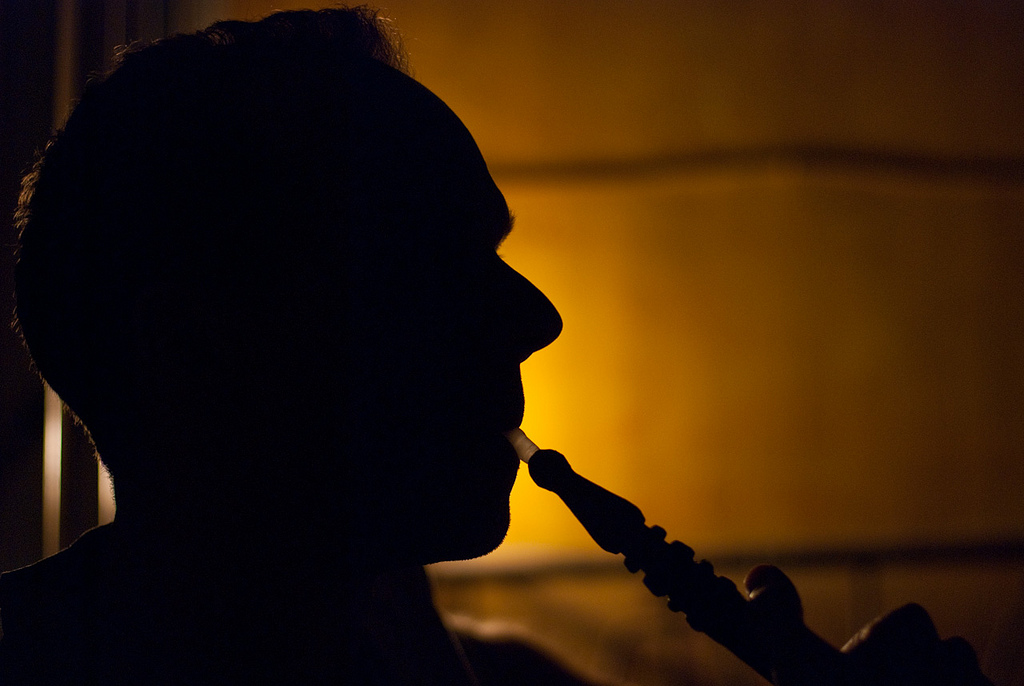
As a singer from Southern Sudan was swinging on stage at a concert for World Music Day in Omdurman, a Sudanese friend commented “What is he doing? We Sudanese don’t dance. Just stay still and sing”, giving an insight into her countrymen’s attitudes towards frolicking. Whilst I don’t whole-heartedly agree with her opinion, the city is lacking when it comes to evening entertainment. More importance is accorded to the people you are with than the activity that engages the group; people sit in homes or restaurants, or smoking shisha in cafés, talking. Night-clubs and dancehalls don’t exist.
For those accustomed to intoxication, Sudan—or at least Northern Sudan—is dry. Alcohol is illegal under the strict imposition of Islamic sharia law, applied in 1991. That is not to say it cannot be found. In expatriate parties around the city, beer will often flow, and if you know the right places to ask, locally brewed merissa (a muddy-looking sorghum-based beer) or ereegi (“gin” distilled from dates that can turn you blind) can be procured. Sat in a rather dubious Ethiopian café with a Darfuri I had met, I was offered Heineken (at extortionate prices) by his acquaintance; presumably smuggled from Ethiopia. Getting caught with the stuff will bring about a heavy penalty.
Excepting a couple of slips, I stayed on the dry-side of life. On the occasions where I succumbed, I was left the next day with much to regret, less from a hang-over, and more from the what-if, had I been caught. It didn’t cross my mind as I stumbled home, but waking in the morning to a text-message saying “Did you make it home safely last night, or are you in a police-cell in need of biscuits?” put things in perspective somewhat.
The problem, too, with alcohol-fuelled parties is that it often leads to an khawaaja-only crowd. Not always, but often. At one soirée, I was given a brief history of Sudanese parties.
“Six or seven years ago, we used to party all the time. We’d drive out into the desert, party ‘til dawn, and then come back in the morning.”
He explained that novel ways were devised to smuggle the alcohol out there. Not all Sudanese are Muslims, and not all those that are, don’t drink. At one point, my friend’s windscreen-washer reservoir was filled with whisky, with a tube feeding it discreetly into the dashboard. A concealed cup would be filled with liquor whenever the lever on the steering column was pulled to “wash” the windscreen.
There was a time when khawaaja parties would be left alone, and they could do whatever they wanted, I was told. Then came a period when the locals started to attend, too, and this caused problems. You can do what you like in your buildings, but keep it to yourselves. He was at a party when it was raided by the police; foreigners were lined-up on one side of the room, Sudanese on the other side. The former were warned, the latter carted off to the cells. My friend was given lashes, and for three years afterwards, had to register at the police station every month. “Now I don’t go to any more “big” khawaaja parties.”
Happily, at the smaller gatherings, there is still a good mix. I loathe the vision of the “ex-pat world”, with embassy staff stay holed-up in their compounds, not mixing with the society in which they ostensibly live.
So many nights were spent in other pursuits. Boats were hired on the Nile, everybody cooking and contributing to the buffet. We ate out often. Countless evenings were spent at Lord Café, drinking sahleb and smoking shisha.
Two Italian friends—il gatto e la volpe—made the social scene here. One raising the bar each time with home-cooked desserts, the other inspiring terrible singing as he strummed the guitar.
I was invited to traditional Sudanese weddings, trying to keep up with the traditional dancing. At the other end of the scale, I danced in the middle of a haboob (strong winds bringing sand from the desert) as techno blasted over the sound-system, a Sudanese friend DJing.
And then there were parties, the soirées…


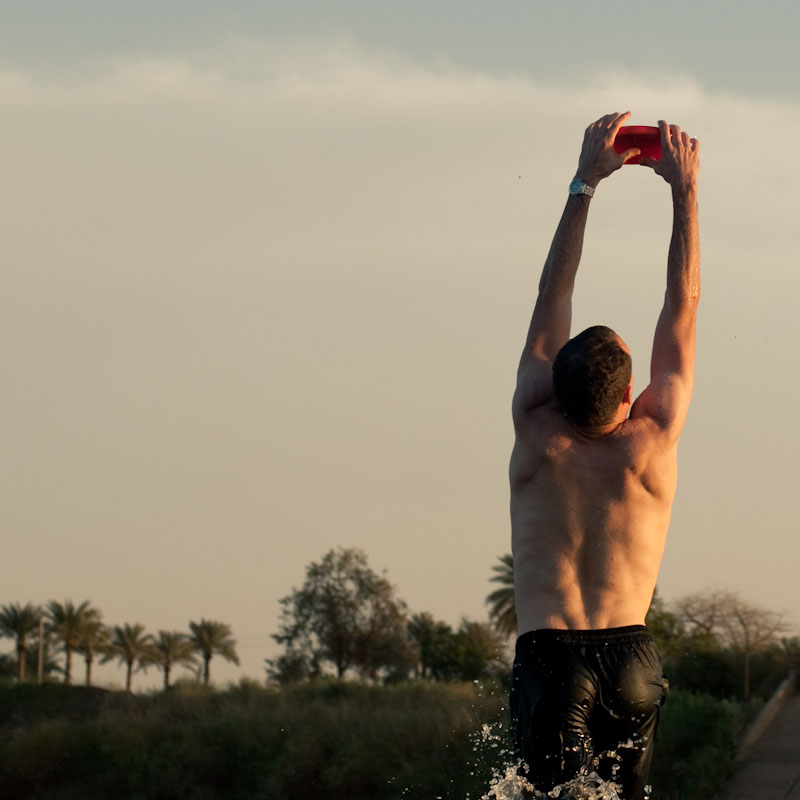


Khartoum is a hot, dusty place. Oppressively so, much of the time. Many expatriates headed for The Greek Club at the weekend, crowding into their pool. I must admit, this wasn’t my scene.
What was my scene was jumping into a friend’s 4x4, driving east of the city and crossing the hot sands next to Omdom, a small, sleepy village just outside the capital. Donkeys wandered the streets amid the needle-like minarets poking up from the dirt-streets.
We could usually muster-up a small group to go out there, laden with falafel, watermelon and a healthy disrespect for water quality. For on the other side of the scalding hot sand was the Blue Nile, its waters flowing from their Ethiopian source.
Djellaba dressed men stroll along the sand, youths splash in the water, and a group of khawaaja arrive, submerging themselves in the headwaters of the world’s longest river.
For the females of the group, the experience is somewhat tarnished - parading around in a swimming costume is somewhat culturally insensitive. A moment to relish being born a male.
Many a Sudanese has tales of friends that have been lost at the “wrong” season of the Nile. There is a fish that arrives with the rainy season up-stream, electrocuting swimmers, paralysing them and causing them to drown.
On my first visit there, a few of us remained following sunset, laying on the sand as the day drifted into night. The sun drops rapidly below the horizon as one approaches the equator. The stars filled the black sky and my thoughts turned to my future. I resolved to prolong my stay in Sudan and look for a job here. The moment—and the people—seemed too good.