Omar al-Bashir in Juba

Omar al-Bashir in Juba

“Bye bye Bashir” people chanted as Sudan’s president, Omar al-Bashir, sped past them in a massive motorcade. Upon the roundabout around which they had congregated, a clock stands, counting-down to the Southe…

Omar al-Bashir in Juba

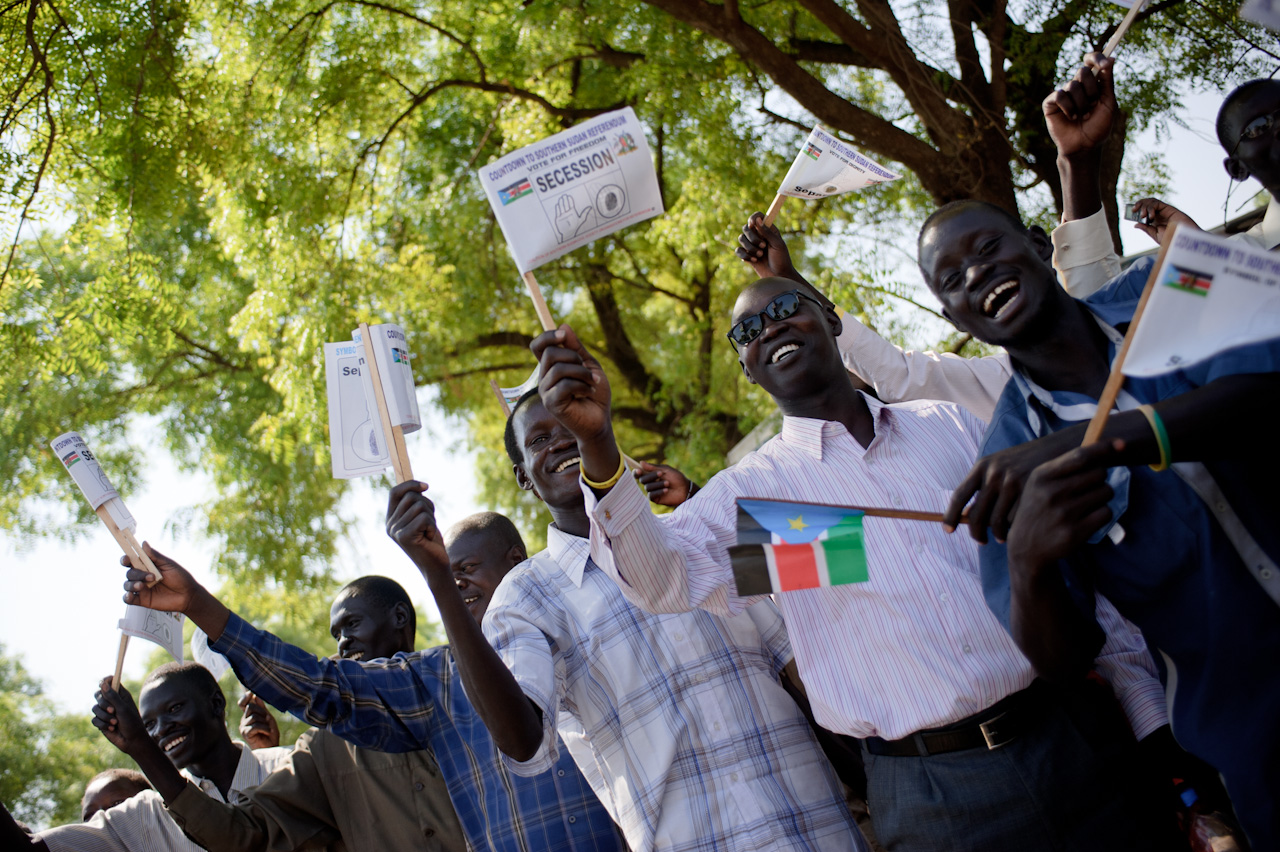
“Bye bye Bashir” people chanted as Sudan’s president, Omar al-Bashir, sped past them in a massive motorcade. Upon the roundabout around which they had congregated, a clock stands, counting-down to the Southern Sudan referendum. Today, it was showing four days.

Despite their chant and the flags they waved which ubiquitously called for secession, with the open palm symbol meaning “separation”, the Southern Sudanese citizens claimed no animosity towards al-Bashir. “We are very happy to see the president here. Southerners have no problem with northerners” said Joseph Mairi from Eastern Equatoria. Banners by the side of the road from the airport greeted al-Bashir, but reminded him that his time as president would soon be over. “We welcome you back to celebrate the independence of south Sudan” read one, erected by a non-governmental civil group.

His visit was one of conciliation, meeting Southern president Salva Kiir, stating that the North would accept the result of the referendum, whether for unity or secession, and that they would help the South post-referendum. “I am going to celebrate your decision, even if your decision is secession” he said.

During recent weeks, the north has made several attempts to convince Southerners to vote for unity, but the feeling here on the street is that it is too little, too late. “What did they offer for the last fifty-five years?” asks Akol Hem Arop, a doctor working in Juba. “We have four days to decide for the future of our people. These four days will not be like the hell of the 50 years of unity. We have to decide at the ballot box. My child will have a better future. He will not be a second class citizen.”

Smoking

A young Nuer smoking at Konyo Konyo market, Juba.

In one month’s time, Nuer, Dinka and all the other tribes of Southern Sudan will be voting to determine whether Southern Sudan will secede from the north. The place has a long way to go to bec…

A young Nuer smoking at Konyo Konyo market, Juba.

In one month’s time, Nuer, Dinka and all the other tribes of Southern Sudan will be voting to determine whether Southern Sudan will secede from the north. The place has a long way to go to become an autonomous, functioning nation.

The (Last) March for Peace

The southern Sudanese have walked a long way to get here. During the civil war war with the north, some crossed the country—on foot—to Ethiopia, before again fleeing violence, walking back through southern Sudan and into the Kakuma refugee camp in the north-west of Kenya. They have left for the United States, Australia and Europe, as well as neighbouring countries such as Uganda and Kenya.

For the last few months, on the 9th, they have been walking through Juba on a “march for peace”. Today would be their last, before voting in the January 9th independence referendum, that will likely see them opt for secession from northern Sudan.

Culminating at the Dr. John Garang mausoleum—the final resting place of the rebel leader who died in a helicopter accident just months after completing the Comprehensive Peace Agreement that ended the second Sudanese civil war in 2005—the atmosphere was electric.

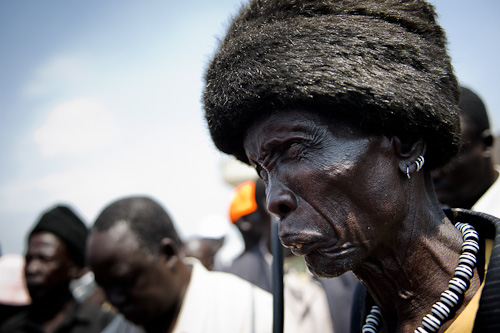
Groups from all over the semi-autonomous had gathered in traditional dress, dancing and marching and expectant before voting to become the world’s 193rd nation.

Masters of the Spear from the ten states had come, sacrificing sheep and Southern Sudan’s national symbol, the cow, to bless the land for peace. After so many years of war, those of us privileged to behold this spectacle all hoped that their offering would work.

Boda Boda

Boda-boda. The Ugandan motorcycle taxis. The only way to get around.

Juba, Southern Sudan.

Boda-boda. The Ugandan motorcycle taxis. The only way to get around.

Juba, Southern Sudan.

Returning from the north

Southern Sudan was marred by civil war with the north for decades. Villages were burned, families slain, children kidnapped. Despite the enemy being “the north”, tens—if not hundreds—of thousands fled to the north, hoping to escape the fighting and violence.

Since the Comprehensive Peace Agreement of 2005, some have returned, although many feared a return to war. In the seventies, a cease-fire was announced, but war returned several years later. Others now feel that the north is their home, despite large-scale reports of being treated as second-class citizens.

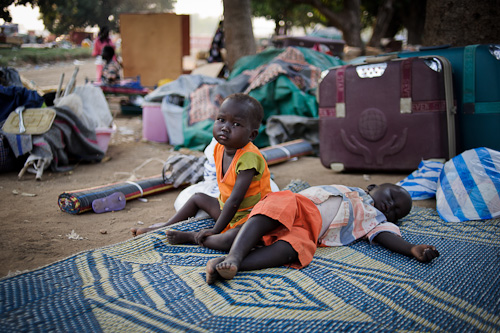
But now, on the eve of the south’s independence referendum, many are returning to their homeland. Yet what awaits them is rather uncertain. Walking around the port at Juba, the area is filled by returning families living out in the open, unable to return to their villages.

One man, who fled the south in 1991 for medical care in Khartoum, spent 25 days with his family aboard a barge to return to Juba. His leg massively swollen beneath the nylon blanket under which he sits, despite the three operations he had in the north, he is unable to walk; his children leave the port everyday to try and find food. The mango trees under which these people now live are all stripped of their fruit. Their source of water is the grimy Nile.

“I don’t know what we are doing here” he says. When he was in the north, he says, police would come to his house and take whatever they wanted. His wife worked as a tea-lady, bringing in a small income. But now, he has virtually nothing, and no means to return to his village in Eastern Equatoria state. He had heard rumours that the World Food Programme would be coming to deliver aid to those stranded at the port, and that buses would be taking them home. But for two weeks now, their home has been this piece of ground of the Juba port authority.

Had he registered to vote? No. He wanted to register at home. But registration ended today. His voice in the determination of southern Sudan would go unheard.