

“God and Muammar [Qaddafi] and Libya, and that’s all”
Graffiti scrawled on the wall of a building in Misrata just captured by rebel fighters from Qaddafi troops.
News and vignettes
![“God and Muammar [Qaddafi] and Libya, and that’s all”
Graffiti scrawled on the wall of a building in Misrata just captured by rebel fighters from Qaddafi troops.](https://images.squarespace-cdn.com/content/v1/50ea8f74e4b0955e460214f6/1357556057576-TNQXLSN6YEP0S2AZHRUL/image-asset.jpeg)
“God and Muammar [Qaddafi] and Libya, and that’s all”
Graffiti scrawled on the wall of a building in Misrata just captured by rebel fighters from Qaddafi troops.
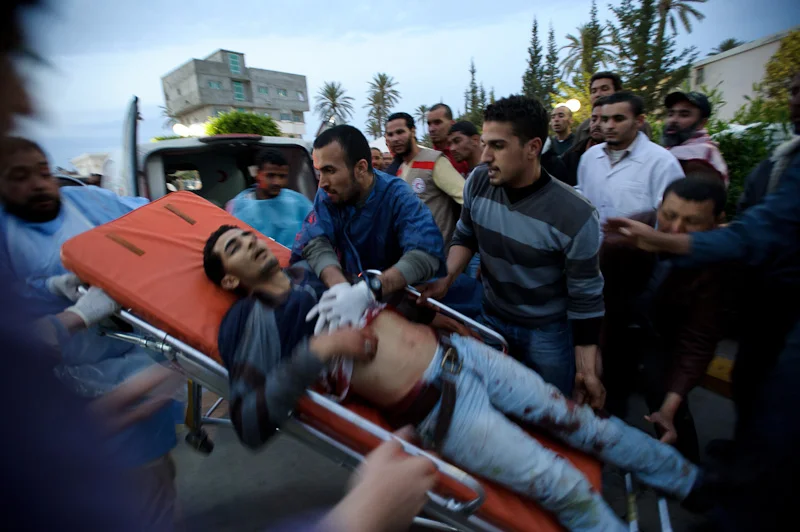

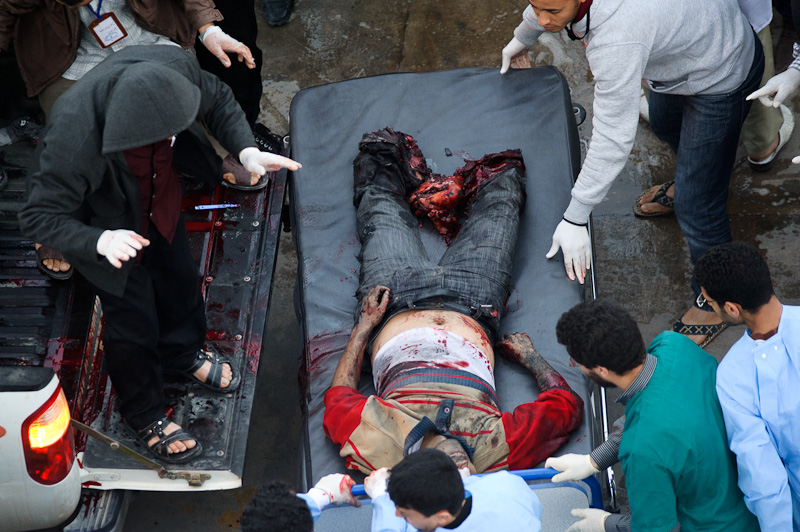

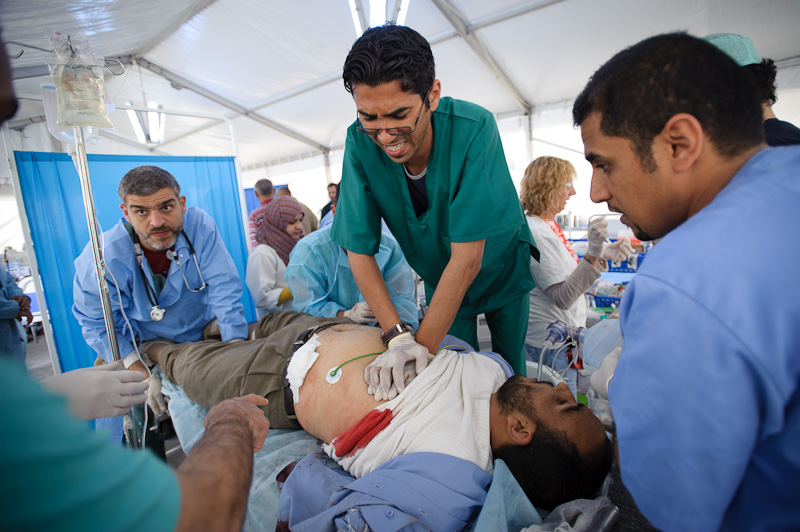


I have never seen so many injured, so much blood, and so many dead. Misrata was a killing field. Based at a hospital in Misrata, when out of the front-line I was still surrounded by it all.
I felt helpless, useless even. Medics rushed around as porters dragged in more of the injured and the dying. Wounds were cleaned, drips were inserted, and doctors tried in vain to resuscitate a man. And all I could do was stand there, taking pictures.
The Libyans I have met have been almost universally grateful that we, the foreign press, were there. They thanked us, telling us that we were risking our lives for their struggle. But we had the choice to be there. We could leave, we could jump on the next boat out. But this was their city, and their lives. They had been suffering this for weeks, and the situation showed no sign of changing in the weeks to come.
In Benghazi, graffiti praised Al-Jazeera, CNN, the BBC, for internationalising their struggle, for coming to their aid and telling the world what was happening. But here in Misrata, as body parts hung from shredded limbs, as blood poured from lethal head-wounds, documenting all this seemed superfluous to me at times. There was so much suffering. And people would ask “where are Nato, what are they doing?” And I had no answer for them.
“I was asleep upstairs when the shells hit” said Hassan, talking of a few nights previously when this huge crater in front of his shop was made. Qaddafi forces had been shelling this ...
It was fast approaching dusk as Hussein called to me, telling me I had to join him. I had trusted this man with my life on several occasions, and I felt that I couldn’t refuse him. There was a battle raging in the Zawiya district of Misrata, and he had to rush his ambulance there.
We arrived to find heavy shelling, as pick-up trucks raced past us, either ferrying more guns to the front-line, or boxes of ammunition. The light was beautiful, but the scene was not.
But then night began to draw in, and as we crossed the city again, away from this apocalypse, I was reminded of a fellow journalist’s comment a few nights previously.
The best advice I’ve ever been given is never go into a gun battle after dark. You can’t report if you’re dead.
I had never been “out” in Misrata at night, and the city had a deathly calm to it, interrupted only by occasional bursts of gunfire and shelling.
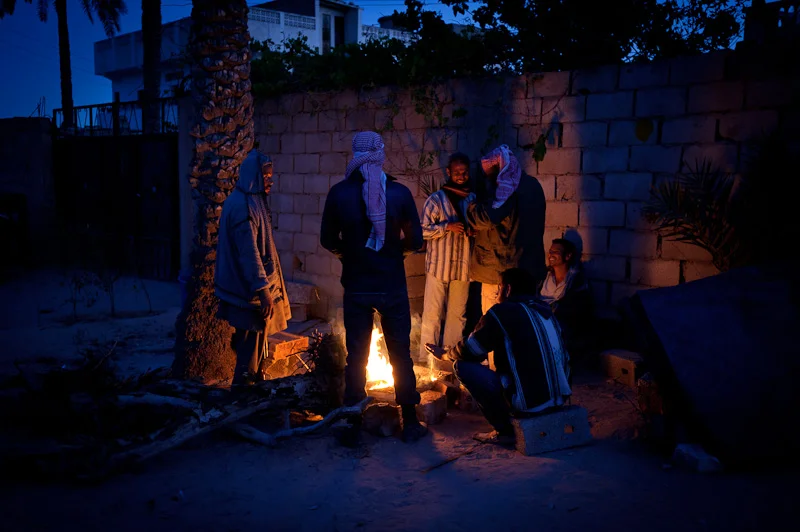
At a checkpoint, a group of rebels stood around a fire. Guns over their shoulder, they were chatting as we stopped to see how they were doing. This was a soulless road to be posted on.
We later drove around the side-streets that bordered Tripoli Street. They seemed very different come night fall. Our ambulance drove without headlights along the pitch-black streets—the lampposts had long since ceased—and Hussein occasionally flicked on his headlights for the briefest moment to spot the debris the lined the road. A flash of a torch, prompted by our rumbling engine, marked a checkpoint ahead.
This was the city by night. Flashes of light.


I didn’t register where we were at first. The vehicle I was in stopped behind a building at the corner of a deserted road; on the other side stood a group of rebel fighters.
Hussein, the ambulance driver I was traveling with, is a calm man. But as he started muttering Islamic chants to himself, I realised that something was not right. La ila illa Allah (“there is no god but God”) and Allah akbar (“God is greatest”) betrayed his concern.
And then we sped forward, bouncing over the central reservation as the fighters opposite us waved us on, telling us to hurry.
I glanced left, and saw a familiar sight. This was Tripoli Street, and we were crossing it. To my right was the roadblock behind which I had sheltered from gunfire just the day previously. We were on the other side of it now, driving across a no-man’s land of bullets. I found myself echoing Hussein’s mutterings.
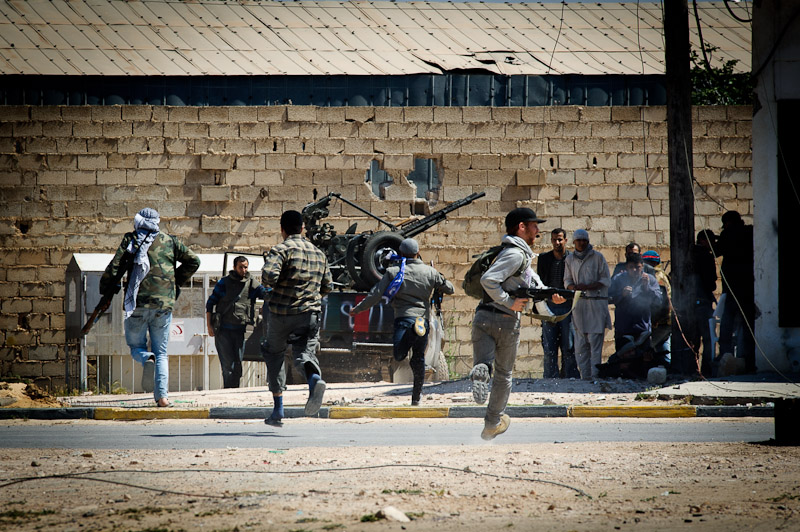
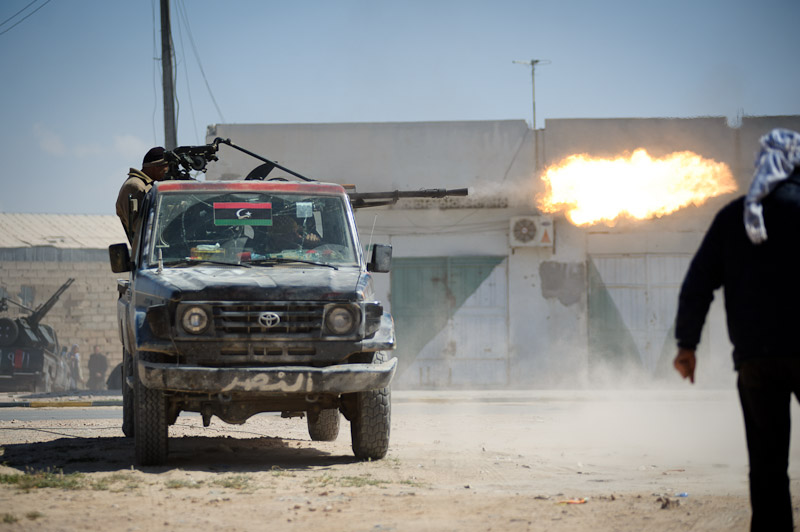
As we pulled into the safety of a side-street opposite, I jumped out to catch some frames of fighters running across in the opposite direction, to where we had just lunged out from. Their guns were blazing, firing aimlessly as they sprinted across the road. The pick-up trucks mounted with heavy machine guns are providing their cover fire.
“We have made some advances since yesterday” a familiar rebel fighter tells me. They have indeed. They are several blocks further towards their target, a building containing the “Qaddafi snipers”.
Over the course of the following hour, the rebels would assault this building with gunfire, rocket-propelled grenades and a deafening 106 recoilless anti-tank gun. The pick-ups would race out into the street, emptying their chain of bullets, and then speed back into cover.
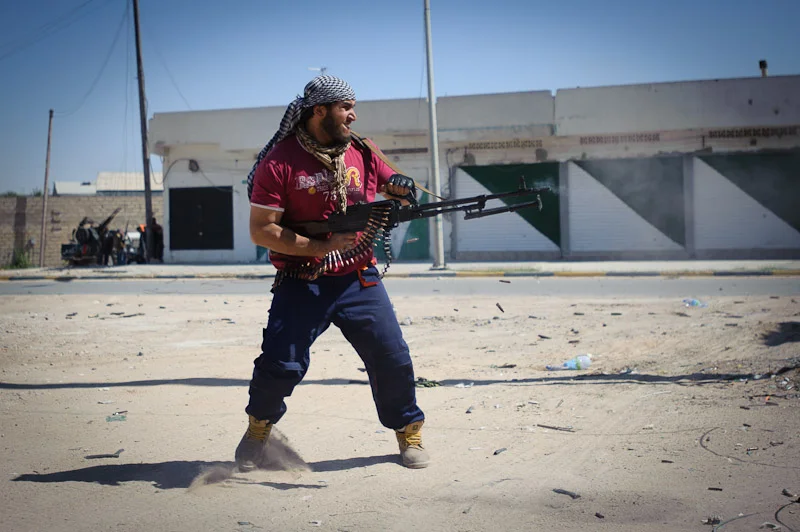
Other fighters would take their place, brazenly stepping out into the street, emptying their belts.
I couldn’t help but think that they were suicidal.
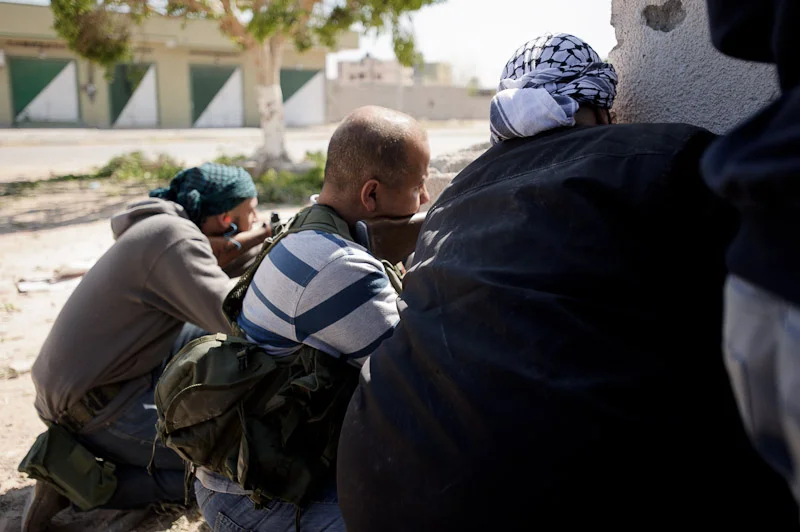
Another group take me into a small building, where a hole from an incoming shell provides them with a glimpse of their enemy’s position. From the buildings corner, a group of three men peer around the corner through binoculars, before firing off rounds from their rifles.
The efficacy was questionable, but their desire was not. This was the battle for Tripoli Street.