

“The task of a reporter is to investigate and reveal both the good and the bad he or she discovers.”
News and vignettes
“The task of a reporter is to investigate and reveal both the good and the bad he or she discovers.”
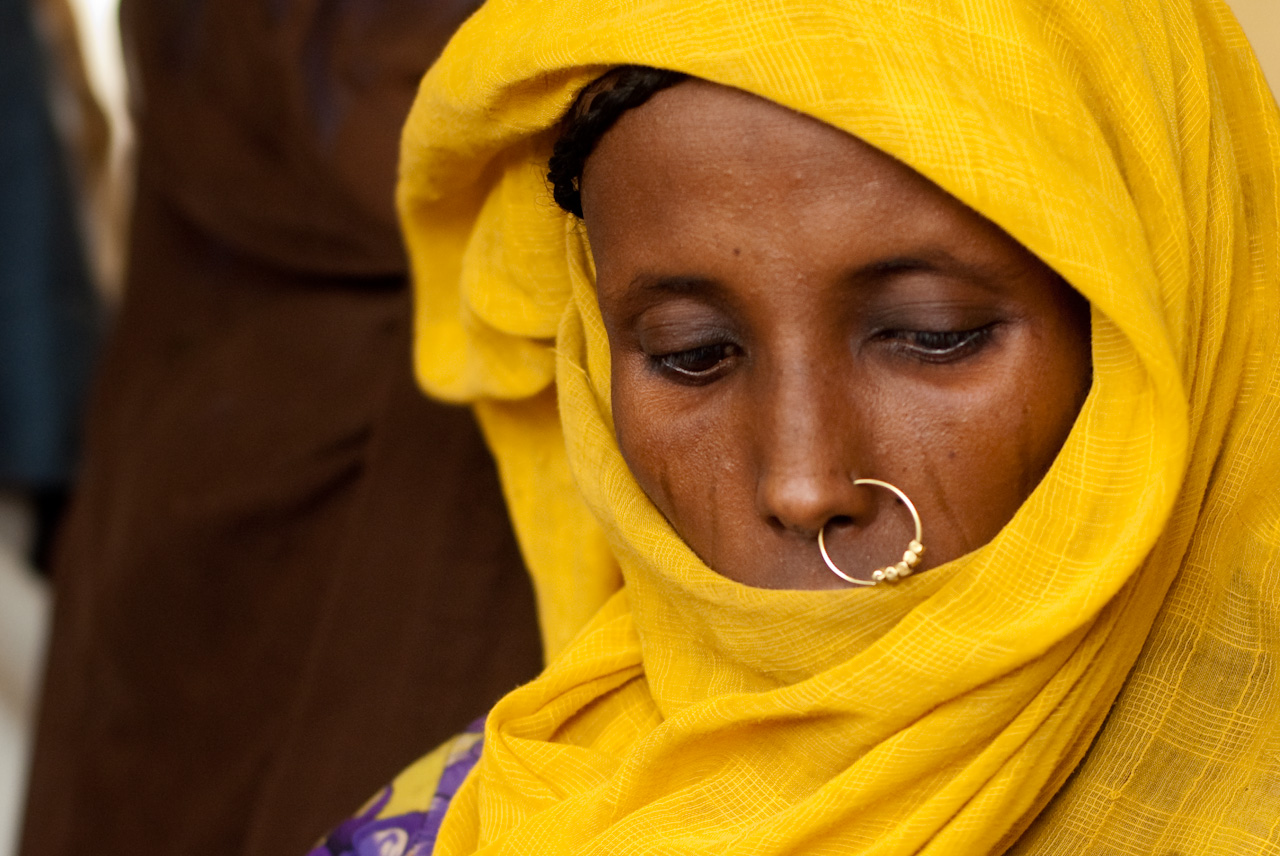
A group of children are stood around a lone building in the dusty, arid land of North Delta, near Kassala. On the step of the building, shaded from the heat of the midday sun, sit their mothers, with small babies swaddled in their toobs on their lap. Behind them, a health workers weighs a child. These semi-nomadic people, struggling to live in this desert environment, were all here to benefit from the work of Hamid al-Taib Hamid & his team of health workers working at this outpost. Dr. Mohammed Jalaleldeen, a UNICEF nutrition consultant in Kassala, describes him as “the most motivated person I have met, always happy”.
“Ashkira”, as he is known locally, is working at one of the many Outpatient Therapeutic Program (OTP) that have been established in Eastern Sudan over the past year or so, rolling out community management of acute malnutrition (CMAM) using Plumpy’Nut, described as UNICEF’s “star product”. CMAM has been in Sudan since 2001, but has only recently been approved for use in regions outside Darfur. Dr. Jalaleldeen had previously worked in the conflict-torn region, but describes malnutrition in Eastern Sudan as worse than there. Generations have grown up here malnourished, and so the situation is seen as normal.
Some of the people using this clinic survive on one meal a day‚asida, the Sudanese equivalent of porridge‚ and drinking cows’ milk. There are traditions in this particular community where people don’t wash their clothes or themselves, thus exacerbating problems of hygiene. As well as providing treatment for malnourishment, health workers here advise the community about sanitation, hygiene, and how to supplement their diet. “Now people are [washing their hands], I have noticed a decrease in illness amongst the children” says Firial Osman, a volunteer at the Arooma Primary Health Care Unit, an hour’s drive away.
The success of the clinics is not only visible in the statistics of treated cases. A visible improvement in weight, height and even behaviour are changing the lives of these children.
Before, the children looked depressed and had no colour. Now they look more active. Before, they were crying all the time, and now they have begun playing.
— Hamid al-Taib Hamid
This work has all been carried out with close interaction with the state Ministry of Health. Interviewing Dr. Artor, the PHC Director for the ministry, he explains that the programs have been very well accepted by the communities here, with high political commitment of the Wali and the minister of health. But they still face a lot of challenges. In Blue Nile State, for example, vast swathes of the state are cut off for months at a time with the onset of the rainy season. Supplying goods, as well as monitoring the progress of the centres, is a great difficulty.
The results on the ground, however, are stunning. As I talk to Ashkira, a box of empty Plumpy’Nut wrappers sits behind him, testament to the children his team have treated. These centres are changing‚ and saving, people’s lives.

The pot-holed road stretches along to the horizon, and on either side of it an expanse of flatness extends. Not a hill, nor even a rise, in sight, seemingly going on for ever. These were the vast agricultural plains of Gedaref State, en route from Ed-Damazine to Kassala.
Eastern Sudan is plagued by drought and is chronically food insecure, the World Food Program puts malnutrition rates consistently above emergency levels. The previous day I had been visiting health centres and hospitals, on assignment for UNICEF, covering their nutrition projects there, seeing malnourished children receiving new treatment as part of UNICEF’s work in the region.
But this was fertile land through which we were driving. The vast plains of land here are part of the largest agricultural area in Sudan. They used to grow enough sorghum to export to neighbouring Ethiopia; now Sudan is importing from Ethiopia, fields left bare. Something is going wrong.
At times, we would wait as impossibly thin cattle crossed the road, driven by the pastoralists struggling to make a living. Tokuls occasionally appeared by the roadside in isolated communities. This was the most green I had seen for a very long time, having become habituated to the arid desert that surrounded Khartoum.
Stopping at the Sudanese equivalent of a service station, tea ladies in wooden shacks plying their trade, a storm was rolling in behind us. As we continued towards Kassala, the force of the climate here became suddenly apparent. Without warning, torrential rain engulfed the desert, flooding the make-shift shelters that lined the road. Fifteen kilometres later, and less than twenty minutes drive, a haboob whipped sand and dust across the road—and our windscreen—turning the sky orange. Granted, the agriculturalists have a hard time cultivating this environment.
It was now a race to reach Kassala before night-fall, the Taka mountains for which the city is famed, shrouded by the sand-storm in the darkening sky.
» See more photos from Eastern Sudan.
“To some extent, drinking and smoking are satisfactory short-term solutions to the problems of stress, depression, and isolation. They provide immediate relief, with few side-effects or immediate dangers.”
A film in the making by Canadian film-maker Alexandra Sicotte-Lévesque, a development worker, journalist and filmmaker. “She worked for almost 3 years in Sudan, in the field of media and development, with the BBC World Service Trust and the United Nations peacekeeping mission.”
At a historical crossroad, Sudan is about to split in two. A referendum on self-determination in early 2011 will likely separate the Muslim North and the Christian South into two countries. Yet the current country’s capital, Khartoum, is a haven of peace and stability where Sudanese from different regions, ethnicity and religion coexist. Youth from diverse backgrounds are all waiting each in their own way to build Sudan. But their country is a ticking bomb. The film follows young people ranging from the ages of 8 to 30 whom all live in Khartoum, and are each confronted with a unique quest.
See the demo of the film, read more about it, and if you like what you see, you can help make it happen by backing it on Kickstarter.
