Hell’s Gate National Park

It felt good to be out in nature again. Hiring mountain bikes and taking them for a spin as warthogs scuttled in the long grasses beside the track. I couldn’t help but thing of pumbaa in the Lion King, and sing…

Hell’s Gate National Park

It felt good to be out in nature again. Hiring mountain bikes and taking them for a spin as warthogs scuttled in the long grasses beside the track. I couldn’t help but thing of pumbaa in the Lion King, and sing to myself “…when I was a young warthog…”. Sad, I know.

As you enter the national park, a column of rock—Fischer’s Tower—rises out of the plains. I had to have a boulder around, despite wearing heavy hiking boots and soloing up a little too high. It felt good to touch rock again. I am starting to realise I miss certain things…

At the other end of the national park the earth opens up and one can descend into the Masai land of Ol Njorwa, the Lower Gorge. The change in landscape is dramatic, as hot water seeps out of the rock in this area of geothermal activity. Walking through with a Masai guide from the local community, he points out the plants that provide natural remedies.

Riding back from the park to the camp, the road is lined by small children from the flower-growing communities that have sprouted up here. “How are you? How are you?” choruses out as we cycle past. Two days ago I was in another world.

Change amongst the hills

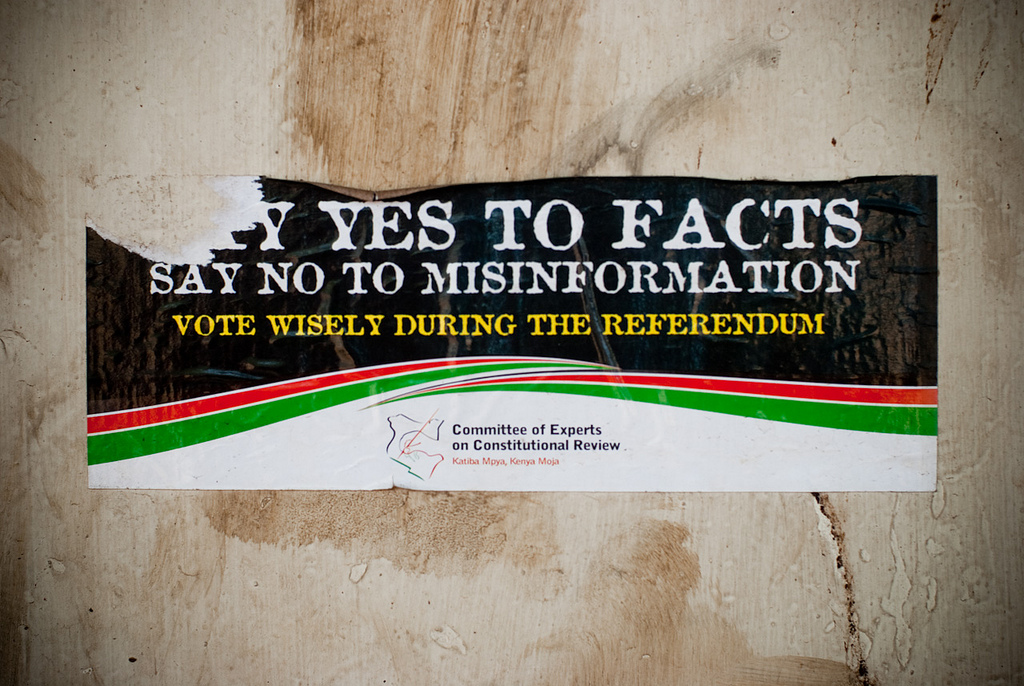
I have a knack for arriving in places as key events are going on. The day after I touched down in Nairobi, Kenyans were voting in a referendum to change their constitution; it has not really changed since the one agreed in …

Change amongst the hills

I have a knack for arriving in places as key events are going on. The day after I touched down in Nairobi, Kenyans were voting in a referendum to change their constitution; it has not really changed since the one agreed in 1963, following their independence from British colonial rule.

I had come straight to the Rift Valley, which turned out to be the prime ground for the “no” vote to change. It’s not that they opposed changing the constitution, but felt that the proposed one did not go far enough to address issues. Al Jazeera reported that several hundred people fled their homes prior to the vote, fearing violence. The Rift Valley saw some of the worst of the post-election violence in the 2007 elections.

But speaking to people here, they were excited about the opportunity for change. One guy in a Nyama Choma joint (a typical Kenyan “roasted meat” eatery)—who had celebrated with several pints of Tusker—spoke of how this would “change his life”. There would be no more fear of the police, random stops and arrests without charge. No more bribes to pay. Corruption is a big problem, and a big deal in Kenya. The Guardian reported it with a line:

“It will end corruption for ever” … At one stroke tribalism will end, and brotherliness will reign.

— Wanjiku is ready for a new political dawn, the Guardian

People of all age, and all backgrounds were discussing it. And the television screens that night broadcast ever-changing pie-charts and updates to the tallies. Rift Valley would be the only province to vote against this constitution change, two-to-one against, but throughout the rest of the country, it was supported. Sixty seven percent of Kenyans voted “yes”. And so history was made in this East African nation.

The Hour of The Bewilderbeast

Straight from the airport to Nairobi city-centre, passing giraffes and zebra en-route as the taxi sped down the highway past the Nairobi National Park, and then bundled into a matatu with two Australians I had met at t…

The Hour of The Bewilderbeast

Straight from the airport to Nairobi city-centre, passing giraffes and zebra en-route as the taxi sped down the highway past the Nairobi National Park, and then bundled into a matatu with two Australians I had met at the airport. My departure from Sudan was rather last minute, I had bought my ticket the day before, and hadn’t really read a thing about the country. I didn’t even know where, or what, Naivasha was.

But after a bumpy ride there, crammed in with ragga music blaring, we got out and found a camp. The hills rising from around the lake, I realised how much I had missed this kind of landscape, and climate. It felt strange, not to be constantly dripping with sweat. I felt cold at night; I hadn’t been cold for months. Monkeys bounded around the wooden camp buildings, and at night, hippos would wander up from the shore. La pièce de résistance, cold bottles of Tusker beer.

Crescent Island sits near the shore of Lake Naivasha, seasonally connected to the mainland, and unfortunately, increasingly so. The water levels of the lake are dropping, and the water is becoming more and more polluted. This is the region where many of Europe’s flowers are grown, and predominantly Dutch owned flower farms line the shore, their irrigation literally sucking the lake dry, along with the water needs of their thousands of employees, drafted into the region for work.

The island is a small sanctuary for wildlife, the animals initially brought here for the filming of Out of Africa, guaranteeing a backdrop of giraffe and zebra strolling about. I hadn’t planned on playing the whole safari game, the thought of being cooped up in a 4x4 driven round as meat is thrown out to entice the animals doesn’t appeal to me personally, but this was pretty cool. A small motorboat brought us from the campsite, passing herds of hippopotamuses semi-submerged in the lake, and we were left to walk amongst the wildlife, stumbling across a huge python, with gazelle, wildebeest and zebra chowing down in-between the odd giraffe. A lone tokul reminds me of Sudan. The backdrop of the lakes and the extinct volcanoes of the Great Rift Valley rising up behind them was stunning, and exactly what I needed after the four previous months.

So here’s to meeting random Ozzies at the airport.

Nairobi, via Juba

Descending through the clouds, an expanse of green filled the window as I peered out down to the capital of South Sudan. Four hours ago I had no idea that my flight would be transiting through here, and now I wished there was a wa…

Nairobi, via Juba

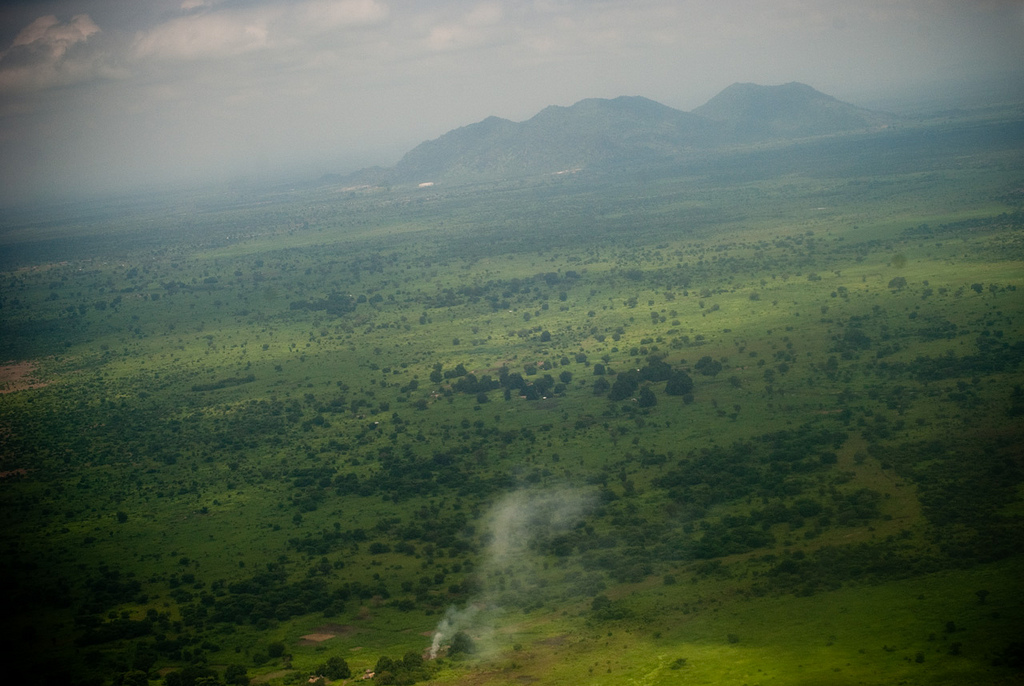
Descending through the clouds, an expanse of green filled the window as I peered out down to the capital of South Sudan. Four hours ago I had no idea that my flight would be transiting through here, and now I wished there was a way to spend some time in the city I had spent so much time reading about during the past four months.

The contrast between the aerial view of Khartoum was striking. The Northern capital is a mass of concrete surrounded by desert. My first glimpse of Juba was a collection of tokuls engulfed in verdure. Landing, a UN helicopter sits on the runway as we taxi in. This is the land of UN agencies and NGOs.

The Comprehensive Peace Agreement (CPA) of 2005 ended Africa’s longest running civil war here in Sudan, and as part of that agreement, a timetable was scheduled for a referendum on the secession of the South. As part of the CPA, the Sudanese People’s Liberation Movement (SPLM) and the National Congress Party (NCP), the ruling parties of the South and North, respectively, were obliged to make unity “attractive” to voters. The rhetoric in Khartoum had been that they were trying this, although many people felt it was too little too late. But still, the talk was talked. Stepping off the aircraft, the first thing that alighting passengers see is a huge billboard compelling people to vote for independence in the upcoming referendum, bearing the face of Salva Kiir, the President of South Sudan and First Vice-President of the Republic of the Sudan and the logo of the SPLM. The referendum will be taking place in just over five months time, if all goes well. I want to be back here for then.

In the Juba terminal, the vibe is a very different one to that of Khartoum. The humidity is stifling, and the whole affair a lot more “rustic”. There are a few white faces in the crowd, each one screams “aid worker”.

I feared that I might face more problems with my now expired exit visa and the debacle that ensued my arrival at Khartoum airport. My fears were unfounded, and I was stamped and ushered back on to the aircraft, along with the sole other transiting passenger from Khartoum.

I expected the plane to fill with Southern Sudanese making the journey to Kenya, but as we climbed the steps from the runway, the door was closed and we taxied back to the runway. This Kenyan business man and myself had the whole of the Russian plane to ourselves.

This is the first time in my ten months of traveling that I will be crossing borders unconscious of the moment when one country changes to the next; the land between two cities an unknown.

“Welcome to Nairobi International airport, the outside temperature is 18°c” announces the pilot. “Bliss”, I think, after four months in temperatures that hovered above 40°c. I can breathe again.

Walking past the duty free shops, alcohol is once again freely available. After four months in Sudan, where the substance is illegal, it seems odd to see bottles of vodka, whisky, gin, stacked on shelves. A line of Japanese tourists stand before me in the queue for a visa, one is wearing hot-pants. This is going to be quite the culture shock after the last ten months spent in the Muslim world. Now, I just hope that they let me in. My passport expires in three months.

Trying (Not) To Leave Sudan

The overhead fan blew a slight breeze over my skin as mosquitos buzzed around in the hot, stuffy air. Forty-five minutes after I finally lay down my head on a pillow, sweat dripping into the mattress, my alarm sounded. B…

Trying (Not) To Leave Sudan

The overhead fan blew a slight breeze over my skin as mosquitos buzzed around in the hot, stuffy air. Forty-five minutes after I finally lay down my head on a pillow, sweat dripping into the mattress, my alarm sounded. But it did not rouse me. Waking up an hour later, the sunrise beginning to stream light into the room, profanities burst through the shadows. I grabbed my bag, locked the house and ran out onto the dusty street, hoping to find an amjad to take me to the airport. The elderly, fumbling driver weaved around pot-holes in the uneven dirt streets as my heart is pounding and I am checking my watch. This is going to be tight.

For the last ten months, I have traveled from Turkey to Sudan without the inconvenience of air travel, each time acutely aware of the precise moment when I crossed an international boundary. I had hoped to carry on this run to Kenya, via Ethiopia and a brief sojourn in Somaliland, but events conspired against me. My passport was soon to expire, meaning that I was denied an Ethiopian visa. The Amharic swirls in the visa I had obtained back in April—when Sudan was just a country of passage—lay unstamped, expired in my passport. And due to my recent work for UNICEF, I hadn’t the time left to travel through Southern Sudan directly to the Kenyan border. And besides, the security situation makes the journey unfeasible.

I didn’t want to leave the country at this point. I had friends, contacts and more work lined up; more importantly, an interest in the country and the months that would follow. But I had reached the maximum number of visa extensions (and then one more on top of that) and was now persona non grata. But now, I risked missing my window to leave.

Arriving at the international departures terminal with a little over an hour before my flight, I was already drenched with sweat, the adrenaline pumping at this early-morning roller-coaster. The guards there operate a strict door policy, and when I said I was taking the Marsland flight to Juba, they pointed me in the direction of the domestic terminal, a kilometre or two down the road. “Since when is Nairobi domestic?” I asked, but they were adamant that Marsland, black-listed by the UN for their safety standards, did not fly from here. Another taxi-ride and I was hauling my backpack into the domestic terminal, hoping he was right. The clock was ticking.

Arriving at the security desk, peculiarly the step before check-in, the problems really began. In my haste of writing articles, saying goodbye to people, and settling my affairs in Sudan, I had misread my exit visa. Fi mushkila said the official on the desk, pointing out I had a problem. My visa had expired the previous day, the day I had bought my ticket. Mushkila kabir — a big problem.

Three years ago when going to Barcelona, I had made a similar mistake. I arrived at Charles de Gaulle ready to fly to the Catalan capital for a weekend, and realised I was a week early. I had a date in my head and didn’t check the ticket. The boy doesn’t learn. But this time, the problem was a lot more serious. I would have to go to the immigration department, back at the other terminal, which at this time of the morning was not open. I imagined the fine I would get slapped with, as well as the lost air-ticket fare. The thought of turning up on the doorstep of a friend I had just six hours before bid farewell filled me with shame.

As I speak to the duty manager for Marsland, he insists that it is not “a problem of the [regime of the] north, it is the paperwork for Juba”. North-South one-upmanship. He extends the check-in deadline for me, and tries to resolve the issue, but with little success.

The clock is still ticking.

Twenty minutes before the flight is scheduled to leave, I make a last ditch effort. “Is there some sort of fine I can pay here, now?” I ask the official. I have never so blatantly proposed a bribe, but I am desperate. He takes me into a back-office where a man is seated behind a desk scattered with documents bearing Chinese letterheads. Boxes are strewn around the floor. He tells me a figure for my “fine” and I balk. Luckily I had stashed my US dollars in a different pocket minutes before, and so I open up my wallet and show them the remaining Sudanese pounds laying in it. “This is all I have.” The man behind the desk sweeps his arms and says something in Arabic I don’t catch, implying that his proposed figure is what was paid for each box.

I walk back out with the official who brought me in, and am led to an office bearing the sign “Customs Inspection”. I fear a search will reveal my stash of dollars. But he repeats the price, and I show him how much I have. With downcast eyes, he accepts, against higher orders.

I run over to the check-in desk just as they are selling my ticket—the only unclaimed space on the plane—to a man in a suit. Upon seeing me, they apologise to the man. This man has a ticket. My bag is checked, and I am rushed through security, a whisper in the ear of the man with the stamp. Khalas, it is over.

Walking into the departures lounge I am immediately shown to the plane. A final text-message is sent to a friend in Khartoum. “I did it, I’m through.” There are just the officials in Juba to contend with now, but I am assured that I will not have a problem by the Marsland fixer.

Sat in the plane, an announcement is broadcast saying that the departure has been delayed due to a “VIP” flying in. UN HAS & WFP aircraft line the runway. This is Sudan.

As the city disappears below, the swollen Nile covering a much wider area than when I had arrived four months previously, I think of the people I had met here and were now leaving behind. I plan on coming back, but many will have gone by then, as is the transient nature of the country. With certain refugee friends, our parting words had a strange ring; “I hope you’ll be gone by the time I get back”. They were desperate to leave; I was desperate to come back.